
If it ends, it ends. It doesn’t make it a mistake.

Not everything has to last forever to matter. Not every relationship has to survive to justify its existence.
And I am tired of pretending otherwise.
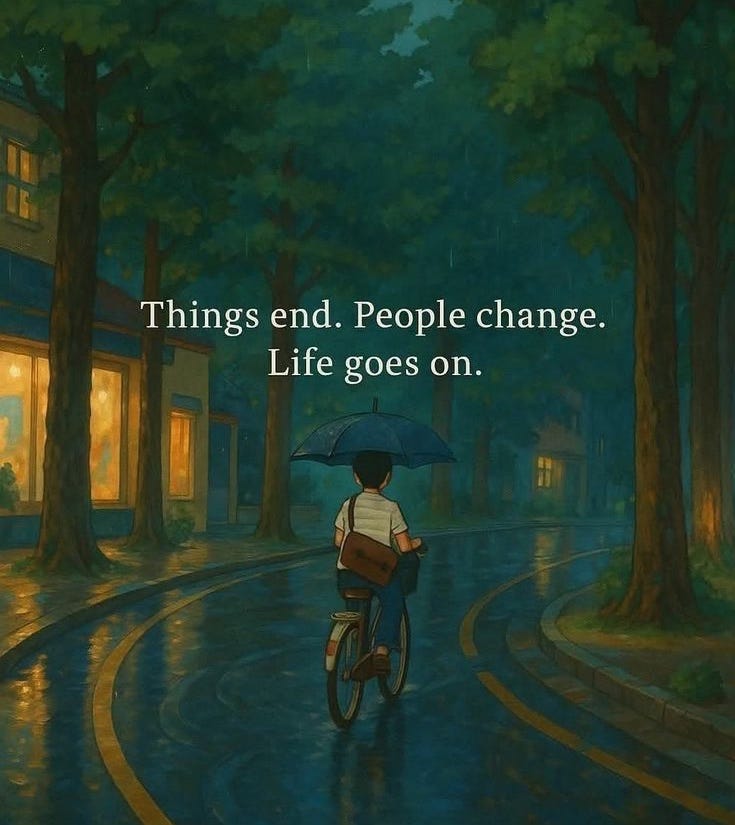
I used to think if something ended, it meant I chose wrong. If a relationship didn’t last, I must have ignored a red flag. Romanticized the potential.
Because if it was real, it would have stayed. Right?
We mistrust anything that doesn’t last. We look at an ending and assume it must reveal something shameful in hindsight. Bad judgment. Poor boundaries. The moment something falls apart, we go back through it and find the exact place where we should have known better.
It sounds simple when I write it down.
But it is also merciless.
Because it leaves no room for the possibility that something can be real and still temporary. That love can be sincere and still end. We say we understand this in theory, but most of us don’t live like we believe it. Most of us still carry the unspoken assumption that the only relationship that counts as successful is the one that survives. Preferably for years. Long enough to look convincing online. Long enough so no one can turn our tenderness into a cautionary tale.
Anything shorter gets labelled under failure.
Endings serve as evidence we should have been smarter and less invested. So when something ends, not only do we lose the person. We lose credibility.
Six months? You rushed it.
Two years? You should have known.
Five years? Wow, how did you waste that much time?
And that humiliation can cut almost as deeply as the loss itself. Now, not only do you miss the person. You feel stupid because you cared.
We don’t talk enough about how cruel this instinct is.
It implies if love didn’t last, then love must not have been wise. As if duration is the only thing validating intimacy.
Yet so much of life becomes meaningful precisely because it cannot stay.
We don’t look at summer and call it a failure because autumn arrives. We don’t accuse a chapter of being pointless because it ends before the book does. We don’t stand in front of a sunset and say, well, that was disappointing. It didn’t stay. And yet when love changes form or comes to an end, we become ruthless. We dissect.
Why didn’t I see it coming?
Why did I give so much?
Why did I believe?
As if believing was the problem.
But I don’t think it is true.
The problem isn’t that it ended. The problem is we expected it not to.
Not everything has to be a long-term investment. Some things end because they reached the edge of what they came to do. Not because they were flawed.
I’ve had conversations that lasted one night and changed the way I see the world. I’ve had friendships that burned bright and disappeared, and I wouldn’t erase them even if I could. I’ve loved someone who isn’t in my life anymore, and even with the ache, even knowing how it ended, I still don’t regret loving him.
It happened.
It mattered.
It ended.
Those three truths don’t exclude each other.
We are obsessed with timelessness. We date like we are evaluating a lifelong contract. We try to predict the ending before we allow ourselves to enjoy the middle. We don’t want to be the one who cared more.
So we hold back.
We ration affection.
We stay guarded.
We keep one foot out the door.
But the irony is hard to ignore. Even the relationships that work still end in one form or another. If not through separation, then through death. No version of love escapes ending altogether. So why do we keep treating endings as proof that the whole thing failed? Why do we let mortality discredit meaning?
If something moved you, expanded you, woke you up, how can it be worthless because it didn’t last?
What a brutal way to live.
Not every ending is evidence we chose badly. Sometimes grief follows because the experience mattered.
Sometimes two people meet exactly when they are supposed to. Not to stay forever. Just to alter each other in ways that would not have happened otherwise. One person shows you how selflessly you can love. Another shows you how to speak your mind. And then they leave, or you leave, or life changes shape around both of you.
One of the bravest sentences a person can say is: it mattered, and it ended.
Some relationships are not meant to stay. But they are meant to change you. It doesn’t make them detours. But experiences.
And whatever you treat as an experience, you win.
If you treat love like an investment, you demand returns. You measure time. You panic at loss. You calculate whether it was worth it.
If you treat love like an experience, you show up fully. You let it shape you. You let it exist without demanding forever in exchange.
Because then the question isn’t “Did it last?” It is “Did I live it?”
Did I say what I meant?
Did I love with my whole heart?
Did I let myself feel it while it was mine?
Or did I spend the whole time preparing for it to end?
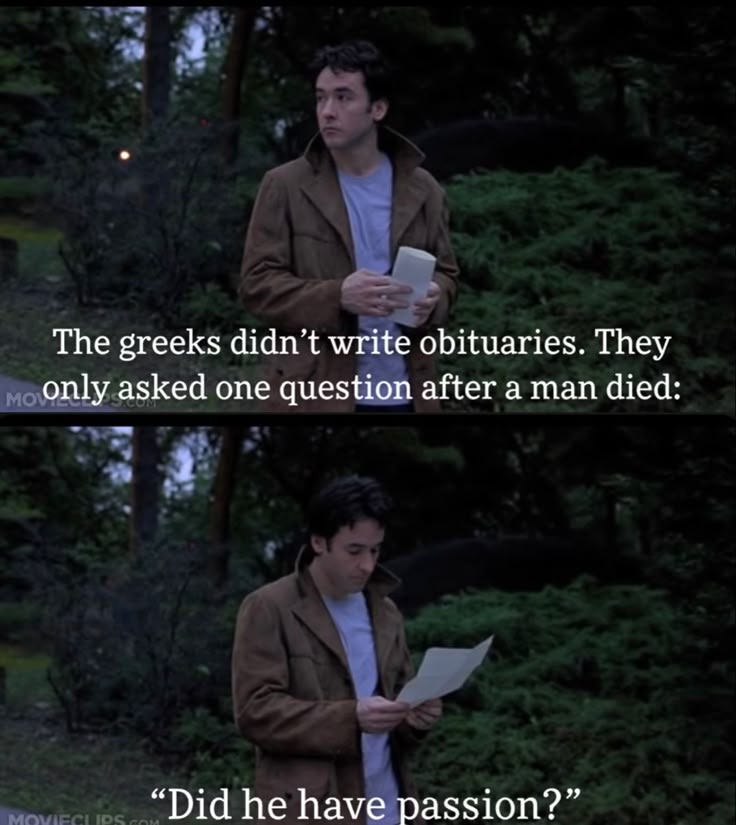
Since the end is inevitable in some form, the only question left is how fully you lived it while it was yours.
If you avoid anything that might end, you eventually avoid almost anything worth having.
You avoid cities you may one day have to leave. You avoid friendships that might drift under the pressure of time. You avoid work that may not turn into the future you imagined. You avoid love because it might not survive.
You end up safe.
And small. Small in your appetite. Small in your contact with life.
I don’t want small.
I don't want to treat every connection like a potential liability. I don’t want to exit before it gets messy, just so I can say I stayed in control. I refuse to measure the worth of my experiences by their longevity.
We think pain proves we chose wrong.
I am no longer convinced.
Sometimes pain is the evidence we chose with our bare heart. And there is no shame in that.
I don’t believe we lose when something ends. We can only lose when we refuse to experience it because we are afraid it might.
If I loved you and it ended, it doesn’t make me foolish. It means I was brave enough to try. Brave enough to care. Brave enough to let love be an experience rather than a transaction.
Yes, it may hurt.
Yes, I may grieve.
Yes, I might look back and miss you.
But missing something doesn’t make it a mistake.
Because what is the alternative? To become so committed to never feeling devastated again that I never let anything affect me deeply in the first place. But devastation is proof you cared. And caring is the whole point.
If it ends, it ends.
It doesn’t erase what it was. It doesn’t cancel the laughter. It doesn’t delete the nights you felt alive.
I would rather have a life full of stories that ended than a life carefully curated to avoid endings altogether. I would rather know what it means to have loved and lost than become someone who keeps every door half-closed just so no one can say I should have known better.
If it ends, I will grieve it.
And then I will love again.
And one day, when everything ends for good, I don’t think we will measure our lives by what lasted the longest.
I think we will measure them by what we dared to feel.
Questions or want to chat about it? Leave a comment or send me a private message :)
Thank you for being here!
These pieces are usually written with a creamy cup of coffee next to me (and a lot of feelings). If you’d like to support the work, you can buy me a coffee via the link. Totally optional, your reading and sharing already mean the world!
you can miss what wasn’t good for you

This piece was inspired by Fatima Aliyu’s vulnerable post, “i don’t want to miss him but i do.”
Reading this after having a breakdown about the same topic, thank you for writing 🤍
I loved every word of this!